BelovedTots began the way most honest things begin. Not with a business plan, but with a problem I could not solve fast enough for the children I was raising.
Who I Am
My name is Saima Mostari. I grew up in Dhaka, Bangladesh, and completed my Master’s in Psychology and Guidance at the University of Dhaka.
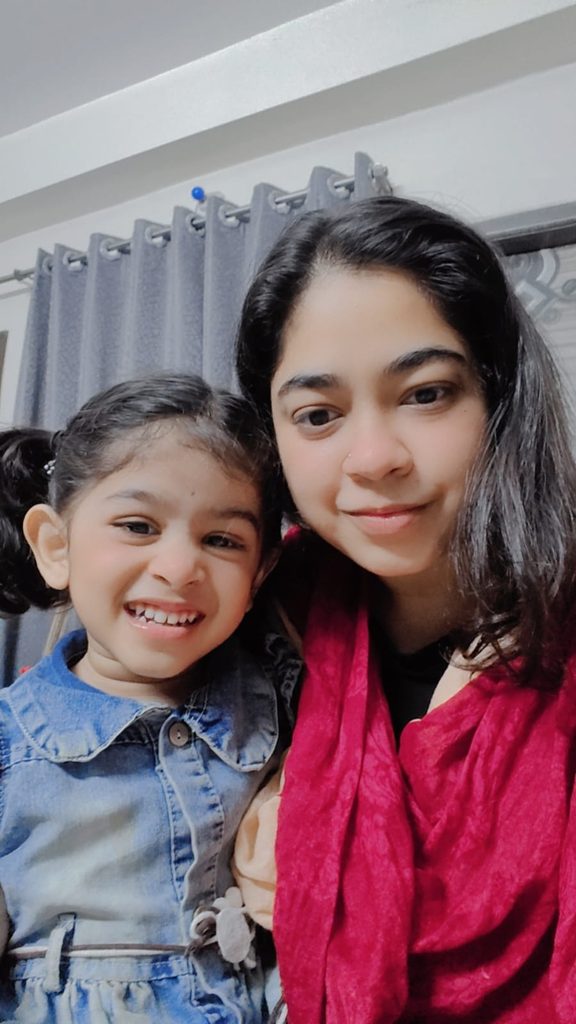
I have raised two young children, Pona and Ruku, who are now 4 and 3 years old. I have been their primary caregiver since they were very young. I changed their diapers, managed their sleep schedules, dealt with their skin troubles, and sat up with them through difficult nights.
Besides raising Pona and Ruku, I have worked professionally in child development. I was part of the team at Neurosparks, a therapy center in Mirpur, Dhaka, that provides Speech Therapy, Occupational Therapy, and ABA Therapy for children with developmental needs. Working there gave me something that personal experience alone could not: a structured, clinical understanding of how children develop, how they communicate discomfort, and how everyday products and routines affect their wellbeing in ways most caregivers never think about.
That combination of raising two children myself and working professionally with dozens of families navigating child development challenges is the foundation that BelovedTots is built on.
How It Started: The Pona Chapter
When Pona was a baby, I did what most caregivers do. I picked a well-known diaper brand that other families recommended, assumed it would work, and moved on to the hundred other things demanding my attention.
Within weeks, I noticed something was wrong.
The rash appeared first. Small red patches around her thigh creases. I assumed it was the heat. Dhaka summers are unforgiving, and I thought her skin was simply reacting to the humidity.
So I changed the brand. The rash got worse.
I changed again. This time to a “sensitive skin” variant. The rash stayed. And then came the leakage. Not the dramatic kind. The slow, quiet kind where you pick up a baby after a nap and realize the bedsheet is damp, the onesie is wet, and she has been lying in discomfort without being able to tell you.
That is the part no product description prepares you for. The guilt of realising you missed it.

What I Actually Learned (Not What the Packaging Said)
Over the next several months, through trial, error, late-night research, and more diaper changes than I can count, I started noticing patterns that no product label or review blog ever mentioned.
Fit matters more than brand. The rash on Pona’s thighs was not caused by the diaper material. It was caused by the elastic leg cuffs being slightly too tight for her build. She was between sizes, and the smaller size created friction lines along her thigh creases every time she moved. The larger size eliminated the rash within two days, but introduced leakage because the gaps around her legs were too wide. The solution was not a different brand. It was a different size, from a brand whose leg elastic had a slightly wider, softer cuff. No review I read at the time ever discussed this.
Nighttime leakage is often a position problem, not an absorbency problem. Pona was a stomach sleeper. I did not realize that the way a diaper sits on a baby changes depending on sleep position. When she slept on her stomach, the front panel compressed under her body weight, and urine pooled forward instead of being distributed across the absorbent core. Switching to a diaper with a longer front panel and a wider absorbent zone toward the front solved the problem. I found this out after weeks of blaming “cheap diapers” when the actual issue was how gravity and sleep position interact with diaper geometry.
Babies communicate discomfort before symptoms appear, if you know what to look for. This is where both my psychology training and my work at Neurosparks started to connect. At the therapy center, I had learned to observe children’s nonverbal cues closely, to read behavior as communication. I began applying that same lens at home. Before visible rash or redness, Pona would tug at the waistband of her diaper. She would shift her weight from one hip to the other more frequently during floor play. Her fussiness after being put down would increase about 30 to 40 minutes after a diaper change, which told me the issue was not hunger or sleep. It was the diaper itself losing its comfort as it absorbed. These were not dramatic signals. They were small behavioral cues that most caregivers would not notice unless they were trained to look.
“Sensitive skin” on a label does not mean the same thing across brands. Some brands use the term to mean fragrance-free. Others mean chlorine-free processing. Some mean a different topsheet material. And a few use it as nothing more than a marketing label with no meaningful product difference. I only discovered this after comparing ingredient and material disclosures across six different brands and realizing that the phrase “sensitive skin” has no standardized definition in the diaper industry.
These are not things I read in a product review. These are things I learned by watching Pona closely, every single day.
Then Came Ruku
By the time Ruku came into my care, I had already made most of the mistakes.
I approached his baby care completely differently. Instead of starting with a brand and hoping it would work, I started with what I knew about him as an individual.
His skin was different from Pona’s. Less reactive, but more prone to moisture-related irritation. His build was different. Longer torso, slimmer legs. He was a back sleeper, which changed the leakage dynamics entirely.
So instead of copying what had eventually worked for Pona, I selected products based on Ruku’s specific needs. Different brand. Different size progression. Different nighttime solution.
The contrast was striking.
With Pona, it took me nearly four months to find a diaper setup that consistently worked. With Ruku, it took less than two weeks.
The difference was not luck. It was not a better product. It was a better process. I had learned to observe first, then choose. Instead of choosing first, then reacting.
What Neurosparks Taught Me
While I was learning these lessons at home, my professional work was teaching me something I did not expect.
At Neurosparks, therapy sessions for young children can run long. Speech Therapy, Occupational Therapy, ABA sessions. These are not quick appointments. They require sustained focus, both from the therapist and from the child. And for many of the younger children, that meant wearing a diaper throughout the session.
Here is something most people outside child therapy do not think about: a diaper that leaks or causes discomfort during a session does not just create a mess. It breaks the session. The child becomes distressed. The therapist has to pause. The parent has to step in to change and resettle the child. And for children who already struggle with transitions and sensory regulation, that interruption can mean losing 15 to 20 minutes of productive therapy time. Sometimes the session never fully recovers.
I watched this happen repeatedly with families who brought their children in wearing cheap or poorly fitting diapers. The leak would happen 40 minutes into a session. The child would become uncomfortable and agitated. The flow of the therapy would break. And the parents, already stretched thin emotionally and financially, would feel frustrated and helpless.
So I started researching. Not as a hobby, but as a practical necessity. Which diapers could reliably last through a full therapy session? Which ones stayed in place during the constant movement of Occupational Therapy? Which ones had the softest topsheet for children with tactile sensitivities who could not tolerate rough textures against their skin?
I began testing, comparing, and recommending specific products to the families I worked with. Not based on advertising or brand reputation, but based on which diapers actually performed under the specific demands of long, active therapy sessions with children who had heightened sensory needs.
That is how my diaper research began. Not in a shop. Not from a blog. In a therapy room, watching a child’s session get derailed by a product that was not suited to their needs.
The experience also changed how I thought about diapers entirely. I stopped seeing them as a simple consumer product and started seeing them as part of a child’s sensory environment. A diaper touches a child’s skin for hours at a time. It affects their comfort, their movement, their ability to focus, and sometimes their mood. For children with sensory processing differences, these effects are amplified significantly. A waistband that is slightly too tight, a topsheet material that feels scratchy, or a fit that restricts leg movement during play can cause genuine distress that has nothing to do with rash or leakage.
Working with those families showed me how little useful guidance exists. The parents I met at Neurosparks were not looking for “the best diaper brand.” They were asking specific, practical questions:
“My child reacts to certain textures. Which diapers have the softest topsheet?”
“My child moves constantly during therapy. Which diaper stays in place without being too tight?”
“My child has eczema. What should I look for in a diaper to avoid making it worse?”
“Which diaper will last through a two-hour session without leaking?”
These are real questions from real parents. And I could not find a single online resource that answered them properly.
That experience at Neurosparks, combined with the contrast between my caregiving journey with Pona and Ruku, is what convinced me to build BelovedTots.
The Gap I Found
After my experience at home and at work, I started paying attention to how baby care products are discussed online. What I found disappointed me.
Most diaper review sites follow the same pattern. They list 8 to 12 products, describe features copied from Amazon listings, assign star ratings, and link to affiliate pages. The information is surface-level. It answers the question “which diaper is popular?” but almost never answers the question that actually matters: “which diaper is right for *my* child?”
Here is what I noticed was consistently missing:
No one talks about the in-between sizes. Most babies spend weeks or months between two sizes. During that window, neither size fits perfectly, and the wrong choice leads to either friction-based rash or leakage. I have never seen a single guide address this.
No one explains how sleep position affects leakage. Front sleepers, side sleepers, and back sleepers all experience leakage differently based on where gravity directs fluid inside the diaper. This is basic physics, but it is completely absent from every “best overnight diaper” article I have read.
No one connects baby behaviour to product discomfort. A baby pulling at their waistband, shifting weight, or becoming unusually fussy after 30 minutes in a fresh diaper are all signals. But without understanding what to look for, caregivers attribute these behaviours to teething, hunger, or mood. Sometimes it is just the diaper.
No one addresses sensory considerations. For children with sensory sensitivities or developmental differences, the texture, pressure, and fit of a diaper are not minor details. They can meaningfully affect a child’s comfort and ability to engage in daily activities. This perspective is almost entirely absent from mainstream baby product content.
No one explains what “sensitive skin” actually means across different brands. The term is used so loosely that it has almost become meaningless. Parents with genuinely sensitive-skinned babies need to know the specific material and processing differences, not just a label.
These are the kinds of observations that come from raising two children and working professionally with families navigating child development. They cannot be written by someone summarising product specs from a manufacturer’s website.
That is the gap I want to fill.
What BelovedTots Is
BelovedTots is built on a simple principle: the best baby care decisions are not about finding the “best” product. They are about understanding your child well enough to choose what is right for them.
My approach is shaped by three things:
My experience raising two children. I have been through the trial-and-error process twice, with two very different children. The practical lessons I learned from Pona’s difficulties and Ruku’s smoother beginning inform everything I write.
My academic background in Psychology and Guidance. I was trained to observe behavior, identify patterns, and understand individual differences. That training gave me a framework for paying attention, and that framework shapes every product I evaluate and every guide I write.
My professional experience in child development. Working at Neurosparks alongside therapists and families taught me to see everyday baby products through a developmental and sensory lens. It expanded my understanding beyond typical caregiving and gave me a deeper appreciation for how seemingly small product choices can affect a child’s comfort and wellbeing.
I do not believe in ranking products from best to worst and calling it a review. Every child is different. What worked perfectly for Ruku caused problems for Pona, and they are siblings. A product that earns five stars from one family may genuinely be wrong for another.
What I believe in is giving parents and caregivers the context they need to make their own informed decisions. Not telling them what to buy. Helping them understand what to look for.
What You Will Find Here
BelovedTots is starting with the category I know most intimately: **baby diapers and diapering essentials**.
Here is what I am building:
- Diaper brand reviews and comparisons that go beyond feature lists. I focus on fit characteristics, real-world absorbency patterns, and which child profiles each product suits best.
- Practical troubleshooting guides for the problems caregivers actually face: rash that will not clear up, leakage they cannot explain, nighttime disruptions, and sizing confusion.
- Sensory-informed product guidance for parents of children with heightened sensitivities or developmental differences, a perspective that is almost entirely missing from mainstream baby product content.
- Product guides for diaper accessories Diaper pails, bags, creams, wipes, and the everyday items that make diapering easier.
- Honest, experience-based content that treats baby care as something personal, not transactional.
Over time, I want BelovedTots to grow beyond diapers into a broader baby care and hygiene resource. But I would rather build slowly and build well than try to cover everything at once.
What I Am Honest About
I am not a paediatrician. I am not a dermatologist. I do not have a medical degree.
When a topic requires medical expertise, I will say so clearly. I will never present personal experience as medical advice.
What I bring is something different. I bring the perspective of someone who has raised two young children, worked professionally in child development, and gone through real difficulty with everyday baby products. I learned from all of it, and I want to help other caregivers avoid the same frustration.
Psychology taught me to look for patterns in behavior. Guidance taught me to listen before advising. And working with children and families at Neurosparks taught me that every child’s needs are individual, and that paying attention to those differences is where good care begins.
If that combination of hands-on caregiving, academic grounding, professional experience, and honest limitations sounds useful to you, then BelovedTots was built with you in mind.
From One Caregiver to Another
If you are reading this because you are trying to find something better for a child you love, I understand.
I have been the person standing in a shop, staring at fifteen different diaper packages, wondering which one will not cause a rash.
I have been the person changing sheets at 3 a.m. because a diaper leaked again.
I have been the person who blamed herself for not figuring it out sooner.
And I have also been the person who finally found what worked, and felt that quiet relief that comes when a baby sleeps through the night without waking up uncomfortable.
That is the feeling I want BelovedTots to help you find. Not perfection. Just a little more confidence, a little more comfort, and a little more peace of mind.
This began with Pona.
It grew through what I learned with Ruku.
It deepened through the families I worked with at Neurosparks.
And now, I hope those lessons can make your journey a little easier too.
Welcome to BelovedTots.
Saima Mostari
admin@belovedtots.com