Bamboo Diapers: Viscose, Rayon and the Box Claims

On a diaper box, "bamboo" usually names the plant a fiber started from, not the fiber in the diaper. The FTC's guidance on bamboo textiles says that something can be called bamboo only if it is made directly from bamboo fiber, and that rayon or viscose made from bamboo may be labeled "rayon (or viscose) made from bamboo." Once bamboo is chemically processed into rayon or viscose, the FTC says, no trace of the original plant is left. That guidance is about fabric, not disposable diapers, but it explains why "bamboo" is a word worth asking a maker about.
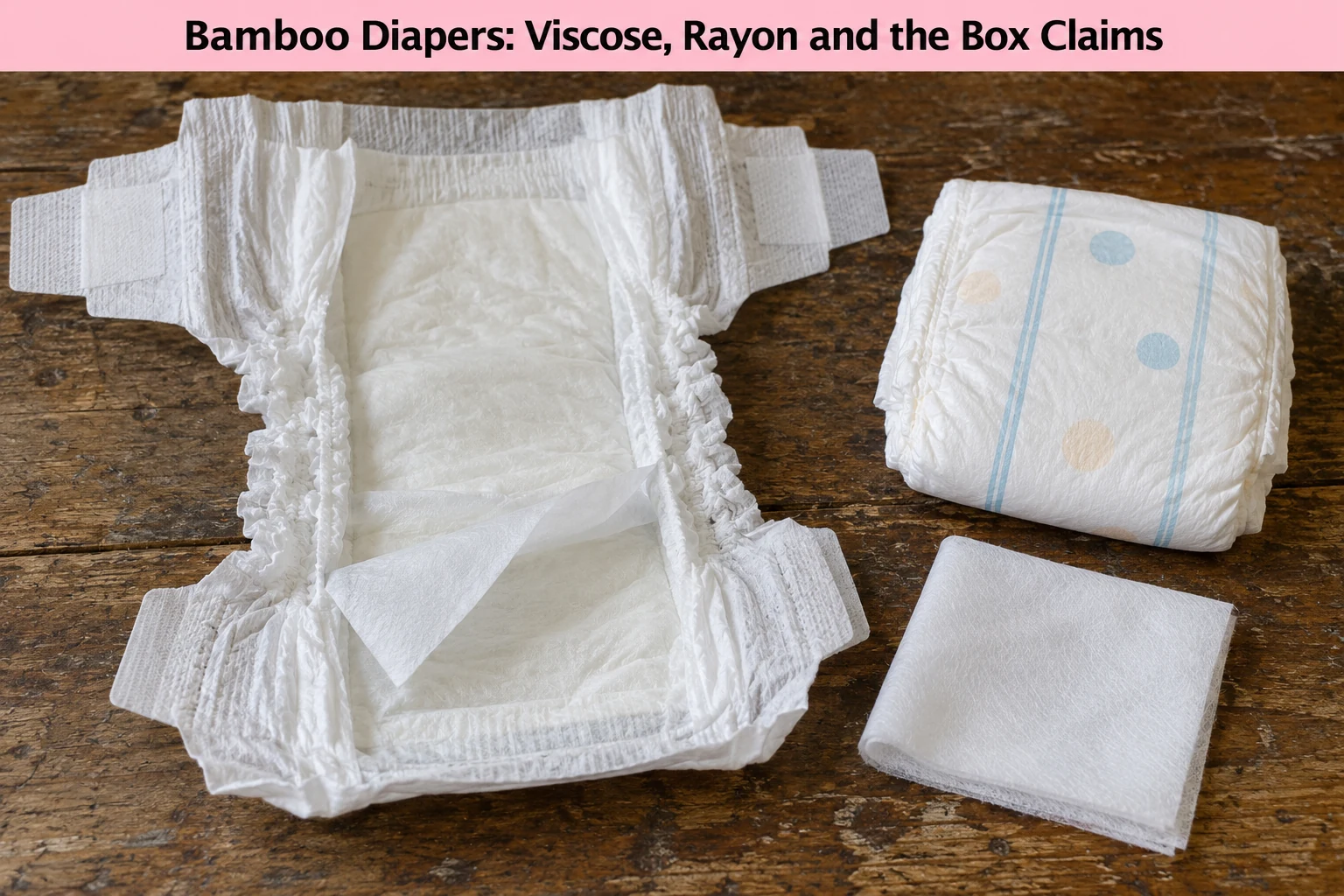
This page covers what the FTC says, how maker wording varies, and the questions that separate a specific bamboo claim from a vague one.
Bamboo diapers: what "bamboo" can mean on the box
There are two very different things "bamboo" can point to.
- Bamboo fiber. A fiber made directly from the bamboo plant.
- Rayon or viscose made from bamboo. A manufactured fiber. Bamboo is the starting plant material, and the plant is dissolved and re-formed in processing.
The FTC treats these as different products. On its bamboo textiles page (read October 3, 2026), the agency says textiles can only be called bamboo if they are made directly from actual bamboo fiber, and that products made from rayon or viscose derived from bamboo may be labeled "rayon (or viscose) made from bamboo" but not simply "bamboo."
A box that says only "bamboo" has not told you which of the two it means. A box that says "viscose from bamboo" or "bamboo rayon" is stating the second, plainly.
"Bamboo on the box makes me look for the actual fiber name, the layer it is used in, and how much of the product the claim covers. A soft liner made from bamboo-derived viscose does not by itself establish natural antibacterial properties or a disposal route. I would check processing, certifications, and end-of-life claims separately instead of treating the plant's name as an overall verdict."
What the FTC says, and what it does not cover
The FTC's guidance rests on the Textile Fiber Products Identification Act. Its page says sellers are responsible for labeling and advertising textile products correctly, and lists enforcement dating from 2009 to 2013 and settlements with Kohl's and Walmart in April 2022 over rayon allegedly mislabeled as bamboo. It also issued warning letters to 78 retailers in February 2010.
Two points on scope:
- This is textile guidance. Whether a given disposable diaper layer is covered by the Textile Act is a legal question this page does not answer. What the FTC describes is the chemistry and the labeling logic, which makes it a useful yardstick for reading the word on a box.
- It is not a verdict on any diaper. A maker can describe a bamboo-derived layer accurately and plainly. The guidance is about whether the description matches the material.
The processing question
The FTC's consumer page on bamboo fabrics (December 2022, read October 3, 2026) says that bamboo advertised as "soft," "silky" or "cool to the touch" has likely been turned into rayon or viscose using toxic chemicals, that the process is far from eco-friendly, and that the fabric may not be better for the environment than other types of fabric.
That is the FTC's description of bamboo fabric production, not a test of a diaper. But it frames the real question for a diaper buyer. If the reason for choosing a bamboo diaper is the environment, the claim worth checking is not the plant but the processing and the end of the product's life. If the reason is the feel against skin, that is a different question again.
How maker wording varies
Makers use different phrases for the same neighborhood of materials. One example from a maker's own homepage, read October 3, 2026: Dyper describes a "100% plant-based inner liner" that is bamboo-based, and lists FSC-certified fluff pulp, a compostable film and a USDA-certified biobased share. That is a plant-based claim attached to a named layer, which is more specific than a front-of-box "bamboo" badge. Two of the four boxes in our sensitive-skin comparison also use "plant-based inner liner" wording, as of that page's August 30, 2026 read.
| Wording | What it points to | What it leaves open |
|---|---|---|
| "Bamboo" | A bamboo-derived material | Fiber or viscose/rayon, and which layer |
| "Bamboo viscose" or "bamboo rayon" | A manufactured fiber from bamboo | Processing route and certifications |
| "Plant-based liner" | Some or all of one layer is plant-derived | Which plant, what share, how processed |
| "Made with bamboo" | Bamboo is somewhere in the product | How much, and where |
| "Biobased" with a USDA mark | A verified amount of renewable biological ingredients, per the USDA BioPreferred page (read October 3, 2026) | The page read does not address processing or end-of-life |
The USDA row matters because it is one of the few checks in this area that an outside body stands behind. It speaks to renewable content. It does not say the diaper is compostable, biodegradable or gentle on skin.
Bamboo and skin: what is claimed, what is sourced
Bamboo diaper marketing often leans on softness or on bamboo being "naturally antibacterial." On the second claim, the FTC's consumer page says a bamboo plant can resist the growth of bacteria, but there is no evidence that rayon fabric made from processed bamboo is "naturally" antibacterial. It adds that companies making such claims need reliable scientific evidence.
For skin more broadly, the American Academy of Pediatrics' HealthyChildren.org diaper rash page (dated 12/18/2024, read October 3, 2026) says babies with sensitive skin may react to a specific ingredient in diapers, wipes or creams, and names dyes or elastics in the diaper, and fragrances or preservatives in wipes or creams, as common allergens. Bamboo is not among the examples it lists, and the page does not say whether any liner material is gentler than another. That is a statement about what the page covers, not a finding either way.
If a baby has a rash that persists or looks severe, that belongs with your pediatrician, whatever the diaper is made of. Our guide to diaper rash and when to call lists the AAP's criteria.
Questions that separate a specific claim from a vague one
- Does the maker name the material? "Bamboo viscose" or "bamboo rayon" is plainer than "bamboo."
- Which layer is it? Topsheet, backsheet, outer cover or core.
- What share of the diaper is it? A named percentage, from the maker, with where it came from.
- Is there an outside check? A certificate number or named standard you can look up, such as a USDA biobased mark.
- What is the environmental claim, exactly? The FTC's Green Guides say broad claims like "eco-friendly" should be qualified with a specific benefit.
- Is "biodegradable" or "compostable" attached to the bamboo layer or to the whole diaper? Those are separate statements.
Our diaper brands guide shows which lines make which kinds of materials claims, which helps put a bamboo badge in context.
Where bamboo fits among eco claims
Bamboo is one label among several that overlap on eco-minded boxes: chlorine-free pulp, plant-based liners, biodegradable and compostable film. Each is a separate claim about a separate part of the diaper. A bamboo claim says nothing about how the pulp was bleached or what happens in a landfill, and vice versa. Reading them one at a time is the only way the boxes can be compared.
FAQ
Are bamboo diapers made of real bamboo?
Usually the bamboo is the starting plant for a manufactured fiber such as viscose or rayon. The FTC says that once bamboo is chemically processed into rayon or viscose, no trace of the original plant is left. A maker's materials page should say which material is used.
Is bamboo viscose the same as rayon?
The FTC's guidance treats rayon and viscose together: products made from them may be labeled "rayon (or viscose) made from bamboo," not simply "bamboo."
Are bamboo diapers eco-friendly?
The word needs a specific claim behind it. The FTC's consumer page says bamboo rayon production is far from eco-friendly and may not be better for the environment than other fabrics, and its Green Guides say broad eco claims should be qualified.
Are bamboo diapers naturally antibacterial?
The FTC says there is no evidence that rayon fabric made from processed bamboo is "naturally" antibacterial. Claims need reliable scientific evidence.
Are bamboo diapers better for sensitive skin?
The sources read here do not say so. The AAP names dyes, elastics, fragrances and preservatives as common allergens and lists a persistent or severe rash as a reason to contact the pediatrician.
Author Profile
-
Eamin Hosen is the founder and author of BelovedTots. He has raised two young children, Pona and Ruku, and spent years working in child development at Neurosparks, a therapy center that provides Speech Therapy, Occupational Therapy, and ABA Therapy for children with developmental needs.
It was there, watching long therapy sessions get interrupted by leaking, ill-fitting diapers, that he began researching how products perform during everyday use and where their performance falls short of packaging claims.
He holds a Master’s in Psychology and Guidance from the University of Dhaka and brings a behavioral observation lens to every product he reviews. When he’s not testing diapers or writing guides, he’s probably negotiating bedtime with a 4-year-old.
Latest entries
- November 13, 2026Diaper Brands and ComparisonsBamboo Diapers: Viscose, Rayon and the Box Claims
- November 12, 2026Diaper Rash and SkinHypoallergenic Diapers: What the Word Really Promises
- November 11, 2026Diaper Brands and ComparisonsChlorine Free Diapers Meaning: TCF vs ECF Explained
- November 10, 2026Diaper Brands and ComparisonsEco Friendly Diapers: What the Labels Actually Mean