
Cloth Diaper Safe Rash Cream: What the Label Means

Short answer: a cloth diaper safe rash cream is one that its maker, or a cloth diaper maker, says will not build up on diaper fabric and make it repel liquid. It is a claim about the laundry, not about your baby's skin. Cloth diaper brands name petroleum-based creams as the main cause of buildup, and some zinc creams too. Their usual fix is either a cream labeled cloth-safe or a liner between the cream and the diaper. Whether a baby needs a cream at all, and which one, is a question for your pediatrician.
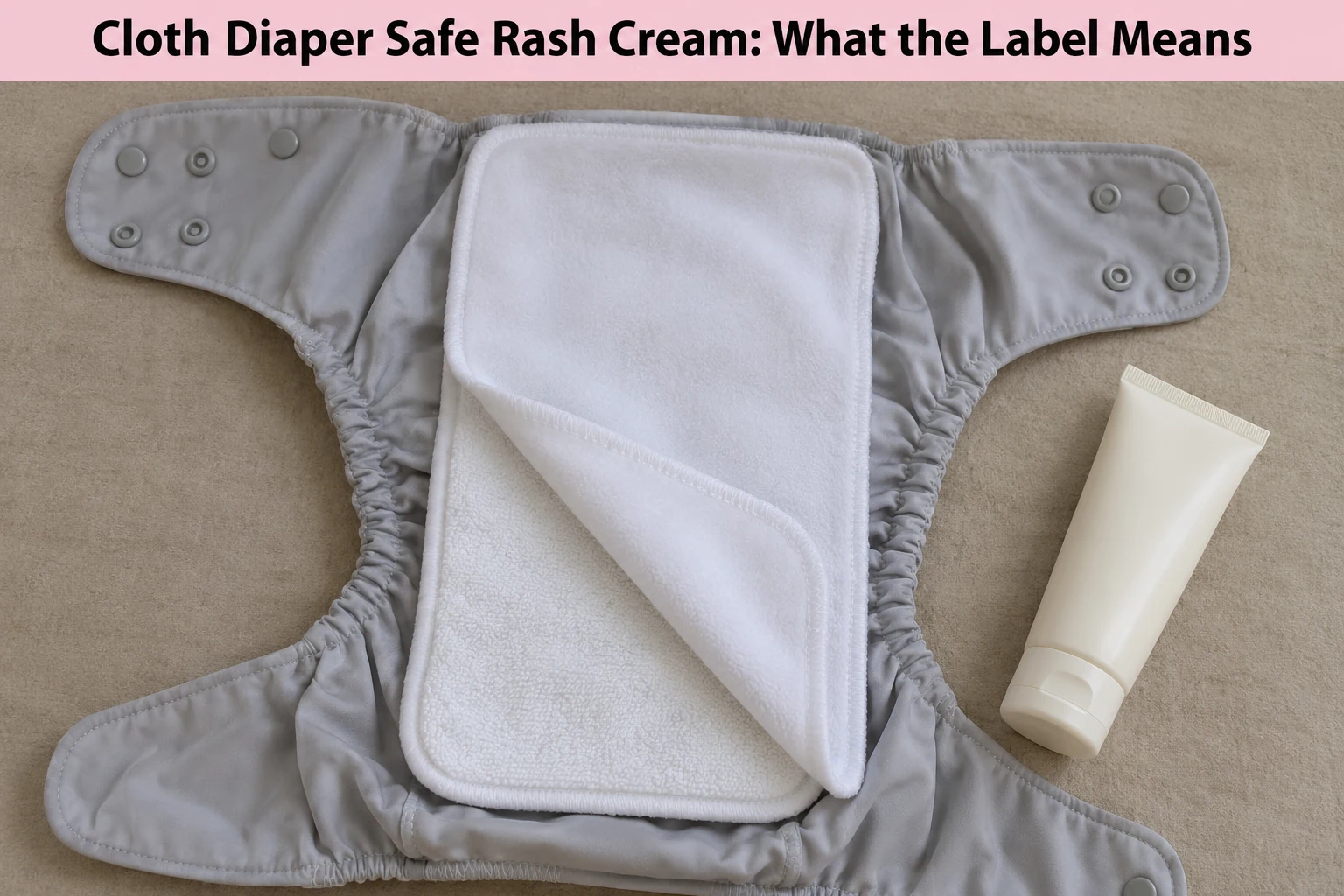
This page explains what cloth diaper makers say, what "cloth-safe" does and does not promise, and where liners come in. It is general information, not medical advice.
First: when a rash is the pediatrician's question
Cloth diaper care is about the diaper. A rash that is not settling is about the baby. The AAP's parent site, HealthyChildren.org, in its page on diaper rash (last updated December 18, 2024, read September 27, 2026), lists these reasons to call the pediatrician:
- The rash does not clear after two to three days of treatment.
- There are pimples, peeling, blisters or oozing sores.
- A baby on antibiotics develops a bright pink or red rash.
- The rash seems especially painful.
- The baby has a fever with the rash.
If any of these apply, the pediatrician comes before any question about inserts. Our diaper rash guide explains the main types of rash.
"I separate the question of what a baby's skin needs from what will wash out of a cloth diaper. A cloth-safe claim tells me about fabric buildup, not whether a cream will suit the rash. I check the diaper maker's guidance and the full cream formula, then consider a liner or temporary disposables when a recommended barrier could coat the inserts."
What "cloth-safe" means, and who decides
There is no single standard behind the phrase. It is used by cream makers and by cloth diaper makers, and each describes it in its own words. What their descriptions share is a concern about the fabric:
- Buildup. Some cream stays in the fibers after washing.
- Repelling. Fabric coated with residue stops soaking up liquid.
- Absorbency. A diaper that repels can leak, because the insert is no longer taking in what it should.
So "cloth-safe" is a statement that a product should wash out of the fabric under normal laundry. It is not a statement that the product is gentler, more natural or better for skin. A cream can be cloth-safe and still not suit a particular baby, and a cream that is not cloth-safe can still be the one your pediatrician suggests. Those are two separate questions.
What the cloth diaper makers actually say
The most useful guidance comes from the companies that make the diapers, because it is written about their own fabrics. Here is what three of them publish, read September 27, 2026.
GroVia. The GroVia FAQ states that only "cloth diaper safe" rash creams should be used, and says to avoid any rash cream that contains petroleum as an ingredient, unless a disposable is used while the rash is treated. It describes petroleum-based products as causing repelling problems that take intensive hand scrubbing with original blue Dawn dish soap to remove. GroVia names its own Magic Stick as formulated for cloth diapers. For a baby with a bacterial or yeast infection, GroVia says to stop using the Magic Stick while the infection is treated, and that skin should be clear for 24 to 48 hours before it is reintroduced.
Thirsties. In its post on buildup, Thirsties says cream buildup is uncommon and mostly comes from petroleum jelly based creams, and that Vaseline and several zinc-based creams can also cause it. It recommends a cloth-diaper-safe ointment, naming its own Booty Love, and if another cream is used, a fleece liner or a cloth wipe as a barrier to keep the diapers from repelling.
Kanga Care (Rumparooz). The Kanga Care cloth diaper FAQ says creams can be used with cloth, but with cloth-safe creams or a protective liner. It says heavy petroleum-based creams can coat inserts and cause absorbency problems, and that thicker ointments or prescription creams call for a Kanga Care washable liner or a GroVia BioLiner to protect the diaper from buildup.
Notice that each maker recommends a cloth-safe product and names one of its own. That is a reasonable thing for a diaper company to do, and it is also why it helps to read their guidance for the ingredient logic rather than the product mention.
Which barrier ingredients cloth makers flag
Most diaper creams use zinc oxide or petrolatum as the barrier; HealthyChildren.org calls both good choices for diaper rash. For cloth, the makers treat them differently:
| Ingredient | What cloth makers say | Source (read September 27, 2026) |
|---|---|---|
| Petrolatum (petroleum jelly) | Main cause of buildup and repelling | GroVia FAQ, Thirsties, Kanga Care |
| Zinc oxide | Some zinc-based creams can cause buildup | Thirsties |
| "Cloth diaper safe" labeled balms | Recommended by each maker, usually its own | GroVia, Thirsties, Kanga Care |
| Thick ointments or prescription creams | Use a liner to protect the diaper | Kanga Care |
This is where the two jobs collide. The ingredients pediatric sources describe as good diaper rash barriers are the same ones cloth makers are most wary of in the wash. That is not a contradiction. It is the reason liners and short-term disposables exist.
Reading a cream label with cloth in mind
To see what is in a cream, the back of the tube is the place to look. On US diaper creams sold as drugs, the Drug Facts box lists the active ingredient first and the inactive ingredients last. Petrolatum often turns up in both places.
On DailyMed, the National Library of Medicine's database of US drug labels, read September 27, 2026:
- Aquaphor Healing Ointment lists petrolatum 41% as its active ingredient.
- Desitin Maximum Strength lists zinc oxide 40% as active, with petrolatum among its inactive ingredients.
- Desitin Daily Defense lists zinc oxide 13% as active, with petrolatum and mineral oil among its inactive ingredients.
So a cream sold as a zinc product can still contain petroleum in its base. For a cloth household, the inactive ingredient list is as important as the headline ingredient. Our guide to diapers for sensitive skin and what the box claims covers the same habit of reading past the front of the pack.
Liners: the practical middle ground
Every maker quoted above mentions a liner of some kind: a fleece liner, a cloth wipe, a washable liner or a GroVia BioLiner. The idea is simple. The liner sits between the cream and the diaper, so the cream touches the liner instead of the insert.
What the sources support saying about liners:
- They protect the fabric. That is their stated purpose in every maker's guidance.
- They do not change the cream. Whatever the pediatrician has suggested for the skin still applies.
- They matter most with thick products. Kanga Care specifically names thicker ointments and prescription creams.
When disposables for a while make sense
Two sources point the same way from different directions.
HealthyChildren.org notes that cloth diapers typically are less absorbent than most disposable brands, and suggests that families using cloth may want to consider disposables until a rash heals. GroVia's FAQ, from the fabric side, says to avoid petroleum creams with its diapers unless a disposable is used while the rash is treated.
For a family committed to cloth, a short switch is not giving up. It keeps a more absorbent diaper on irritated skin and keeps a heavy cream out of the inserts. How often diapers are changed matters too, whichever type you use; see how often to change a newborn diaper.
If a cream has already caused buildup
The signs match the words cloth makers use: fabric that repels liquid instead of absorbing it, and a diaper that starts to leak where it used to hold. GroVia and Thirsties both describe the same fix for petroleum residue: hot water, original blue Dawn dish soap and scrubbing the surface of the diaper.
Before trying any strip or deep-clean routine, it is worth checking your own diaper maker's care instructions. Kanga Care's warranty, for example, states that it does not cover damage from improper washing or drying.
FAQ
What does "cloth diaper safe" mean on a rash cream?
It means the maker says the cream should wash out of cloth diaper fabric without building up and causing repelling. It is a laundry claim about the diaper, not a claim about how the cream works on skin.
Will zinc oxide cream ruin cloth diapers?
Thirsties says some zinc-based creams can cause buildup, while cloth makers name petroleum-based creams as the more common cause. GroVia, Thirsties and Kanga Care all suggest a cloth-safe cream or a liner.
Can I use petroleum jelly with cloth diapers?
GroVia says to avoid rash creams containing petroleum with its diapers unless a disposable is used during treatment, and Thirsties names petroleum jelly based creams as the main source of buildup. A liner is the usual workaround.
Should I switch to disposables during a rash?
HealthyChildren.org says cloth diapers are typically less absorbent than most disposables and suggests families may want to consider disposables until a rash heals. Your pediatrician can advise for your baby.
Does a liner stop cream from reaching the diaper?
That is the purpose cloth makers give for liners. GroVia, Thirsties and Kanga Care each suggest a liner or cloth barrier when a cream that is not cloth-safe is used.
Author Profile
-
Eamin Hosen is the founder and author of BelovedTots. He has raised two young children, Pona and Ruku, and spent years working in child development at Neurosparks, a therapy center that provides Speech Therapy, Occupational Therapy, and ABA Therapy for children with developmental needs.
It was there, watching long therapy sessions get interrupted by leaking, ill-fitting diapers, that he began researching how products perform during everyday use and where their performance falls short of packaging claims.
He holds a Master’s in Psychology and Guidance from the University of Dhaka and brings a behavioral observation lens to every product he reviews. When he’s not testing diapers or writing guides, he’s probably negotiating bedtime with a 4-year-old.
Latest entries
- November 13, 2026Diaper Brands and ComparisonsBamboo Diapers: Viscose, Rayon and the Box Claims
- November 12, 2026Diaper Rash and SkinHypoallergenic Diapers: What the Word Really Promises
- November 11, 2026Diaper Brands and ComparisonsChlorine Free Diapers Meaning: TCF vs ECF Explained
- November 10, 2026Diaper Brands and ComparisonsEco Friendly Diapers: What the Labels Actually Mean